



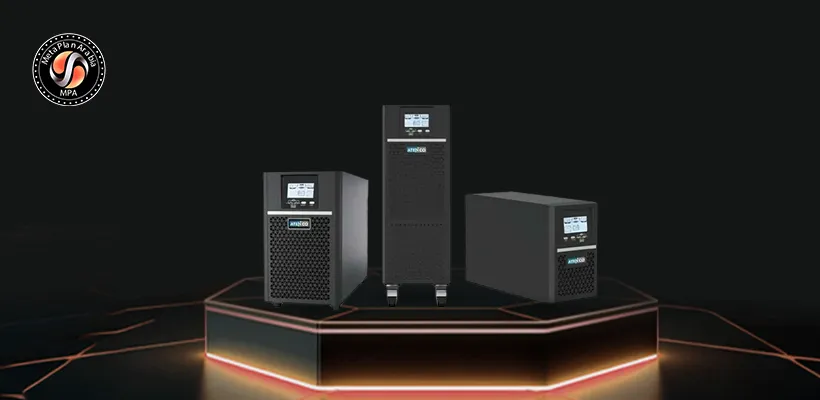
When a sudden power outage strikes a commercial facility, the immediate interruption of servers, network equipment, and surveillance systems can severely disrupt daily tasks. Implementing an uninterruptible power supply Saudi Arabia provides immediate backup energy to connected equipment during these critical moments. The available runtime depends heavily on the connected load, UPS capacity, battery configuration, battery condition, and specific site conditions.
Uninterruptible Power Supply Saudi Arabia for Critical Business Loads
Businesses must carefully evaluate their operational infrastructure to determine which devices require immediate backup energy. An uninterruptible power supply Saudi Arabia serves as a vital bridge during electrical interruptions, allowing essential systems to remain active. Facility managers should categorize their equipment into specific priority levels to optimize the backup power system.
Proper load management requires separating equipment into distinct categories based on operational necessity. Facility managers must identify loads that must remain operational and loads that only require enough time for a controlled shutdown. Additionally, they must pinpoint loads that can be safely disconnected during an outage. High-consumption loads always require a separate technical assessment to ensure compatibility.
Suitability depends entirely on the load, equipment characteristics, UPS rating, output specifications, and battery configuration. No single backup power supply can operate all facility loads simultaneously without proper sizing and distribution.
Servers and Network Equipment
Data centers and IT rooms house the core processing units of any modern enterprise. A reliable UPS power supply delivers immediate backup energy to servers and data storage arrays when the main electrical source is interrupted. Network switches, routers, and communication equipment also rely on this backup power system to maintain internal connectivity and external data transmission.
Facility managers must calculate the exact power consumption of these devices, as consumption varies significantly by model and operating conditions. Providing backup power to these specific loads gives IT administrators the necessary time to perform a controlled shutdown. Alternatively, it provides a crucial window to wait for another backup source if one is available. Integrating an uninterruptible power supply Saudi Arabia into the server room is a fundamental step for IT infrastructure planning.
Computers, Surveillance and Communication Systems
Beyond the server room, numerous operational devices require stable electrical support during unexpected outages. Business computers and monitors need immediate backup energy to prevent sudden data loss and allow employees to save their ongoing tasks. Surveillance cameras, recording equipment, and access control systems are equally critical for maintaining facility security during an electrical interruption.
Point-of-sale equipment and selected control systems also benefit from a properly sized backup power supply. It is important to note that no single UPS system can operate all these loads without a comprehensive technical evaluation. Each application requires careful assessment of the equipment characteristics and the required backup runtime.
Securing your critical business infrastructure requires a precise evaluation of your operational loads and backup power requirements.
How a UPS Power Supply Supports Business Operations
The primary function of a UPS system is to provide immediate backup energy when the main electrical source is interrupted. This rapid response gives users valuable time to continue essential tasks or perform a controlled shutdown. Integrating an uninterruptible power supply Saudi Arabia into a commercial facility requires a thorough understanding of the specific operational loads.
It is crucial to understand that a backup power supply does not provide unlimited runtime. Furthermore, it does not replace a generator in every application. Instead, it acts as a crucial intermediary that supports selected control and operational systems during the initial moments of a power failure.
By maintaining power to essential equipment, businesses can manage the transition during an outage more effectively. The success of this transition depends on accurate load calculation and proper system configuration.
Uninterrupted power supply terminology for facility planning
Uninterrupted power describes the operational goal, while the UPS provides the immediate electrical bridge during a utility failure. An uninterruptible power supply system also conditions incoming electricity and manages transfer to stored energy.
An uninterrupted power source still needs correct load sizing and a suitable uninterrupted power supply battery configuration. The spelling uninterruptable power supply is often used informally, but technical documents normally use “uninterruptible” for the equipment category.
Online UPS and Double Conversion Technology
MetaPlan publishes Atenco UPS systems utilizing advanced Online Double Conversion technology for commercial applications. In this configuration, the incoming AC power is converted before being supplied to the connected load. The system provides continuous conditioned output during normal operation, ensuring that sensitive equipment receives stable electrical support.
When the input supply is interrupted, the battery supports the DC stage according to the system configuration. This technology is highly effective for critical business applications, though it does not eliminate all power-related risks. Selecting an uninterruptible power supply Saudi Arabia with double conversion technology requires matching the UPS rating and output specifications to the facility requirements.
Understanding the basic principles of this technology helps facility managers make informed decisions about their power infrastructure. The continuous conditioning of power is particularly beneficial for sensitive servers and communication equipment.
UPS Battery and Backup Runtime
The core of any backup power system lies in its energy storage capacity. A UPS battery provides the necessary direct current to maintain operations during an electrical outage. Facility managers often seek specific runtime figures, but the actual duration depends on multiple interacting variables.
Understanding these variables is essential for designing an effective uninterruptible power supply Saudi Arabia project. Businesses must evaluate their specific operational needs to determine the appropriate battery configuration. Proper planning ensures that the selected system meets the operational demands of the connected equipment.
Factors That Affect Battery Runtime
Calculating the exact duration a system can support connected devices involves analyzing several technical parameters. UPS battery runtime depends heavily on the actual connected load, the number of batteries, and the individual battery capacity. Furthermore, the battery system voltage, battery charge level, and overall battery condition and age play significant roles in performance.
The UPS operating efficiency, site temperature, required discharge level, and system configuration also impact the final runtime. Because these factors fluctuate continuously, providing a fixed runtime for any UPS model is impossible. Accurate runtime estimations are only possible when an official runtime table is available for a specified load and battery configuration.
Internal Batteries and External Battery Cabinets
Backup power solutions offer different physical configurations to accommodate varying energy storage requirements. Some Atenco models provide internal space for a specified number of batteries, offering a compact footprint for facilities with limited space. However, this does not mean that all models are supplied with batteries or that internal batteries always provide a short runtime.
For applications requiring extended support, external battery cabinets may allow runtime to be increased according to the connected load. This expansion depends on the number and capacity of batteries, charger configuration, and model compatibility. An external cabinet does not guarantee several hours of operation without proper load calculation.
Evaluating your battery runtime requirements ensures that your critical equipment receives adequate support during unexpected power interruptions.
UPS Installation and Site Requirements
Deploying a backup power supply requires careful planning and adherence to specific environmental and structural guidelines. Proper site preparation ensures that the equipment operates within its designed parameters. Installing an uninterruptible power supply Saudi Arabia involves assessing both the physical space and the electrical infrastructure of the commercial facility.
Fixed electrical connections should always be completed by a qualified person according to the equipment requirements and applicable site rules. While proper installation is crucial, it does not guarantee fault-free operation without ongoing monitoring and maintenance. Facility managers must coordinate with technical teams to ensure all site requirements are met before the equipment arrives.
Electrical Supply and Load Distribution
The electrical infrastructure of a facility dictates how a UPS system integrates with existing power networks. Installation requires a thorough evaluation of the electrical source, including the number of phases and the layout of distribution boards. Technicians must plan precise cable routes and install the required circuit breakers to manage the power flow safely.
Understanding the distribution of loads across the facility helps in selecting the appropriate UPS rating and output specifications. A well-planned electrical integration ensures that the backup power system can efficiently transfer energy to the designated loads. Evaluating the electrical supply is a critical step in any uninterruptible power supply Saudi Arabia deployment.
Space, Ventilation and Temperature
Environmental conditions significantly impact the performance and longevity of backup power equipment. Site considerations must include the available installation space, equipment dimensions, and battery cabinet dimensions. Facility managers must verify the floor or rack load capacity to support the heavy weight of the UPS battery units.
Adequate ventilation and strict control of the operating temperature are essential to prevent overheating. The equipment must maintain a safe distance from heat and moisture sources, and there must be sufficient access for inspection and maintenance. Rack availability is also a key factor when using rack-mounted models.
UPS System Monitoring and UPS Maintenance
Maintaining visibility over the operational status of a backup power system is vital for facility management. Effective UPS system monitoring may include tracking the connected load, battery status, input power condition, active alarms, and operating events. Temperature warnings and conditions requiring inspection are also critical data points that require continuous observation.
Implementing an uninterruptible power supply Saudi Arabia with robust monitoring capabilities allows IT and maintenance teams to respond promptly to system alerts. Regular observation of these parameters helps maintain the readiness of the backup power infrastructure.
SNMP and System Alerts
Advanced communication interfaces enhance the management of backup power infrastructure across large commercial facilities. Some Atenco systems support SNMP cards or relay cards according to the model and selected configuration. Relay cards provide dry contacts that may be used to transmit selected status signals to central monitoring stations.
Compatibility with building management or control systems should be checked before integration to ensure seamless communication. These monitoring tools help facility managers track operating events and input power conditions. Utilizing these features within an uninterruptible power supply Saudi Arabia setup provides valuable data for ongoing system evaluation.
Battery Inspection and Maintenance Indicators
Routine evaluation of the physical and operational state of the equipment is a fundamental aspect of facility management. UPS maintenance may include checking equipment alarms, battery condition, electrical connections, ventilation, operating temperature, load level, and event records. Technicians look for specific signs that may require battery replacement or further inspection to maintain system readiness.
Periodic inspection helps businesses monitor the condition of the UPS system and batteries and identify signs that may require maintenance or replacement. This proactive approach supports operational stability, although it does not prevent failures or guarantee business continuity.
Establishing a routine inspection schedule helps maintain the readiness of your backup power infrastructure for critical moments.
Atenco UPS System Options from MetaPlan
MetaPlan lists Atenco Online Double Conversion UPS systems in several configurations to support diverse commercial requirements. Selecting the right uninterruptible power supply Saudi Arabia involves matching the specific equipment series to the facility constraints. The available options cater to different installation formats, ranging from standalone towers to integrated rack solutions.
Each series offers distinct features regarding battery accommodation and monitoring capabilities. Facility managers must carefully review these options against their planned operational loads and site conditions.
TM11E Tower UPS
The TM11E Series features a traditional tower design suitable for various standalone commercial applications. This single-phase configuration includes published ratings of 1, 2, 3, 6, and 10 kVA. Some models provide internal battery space, while some 6 and 10 kVA models use external batteries to meet specific runtime requirements.
Compatible battery cabinets are available for specified models to support extended backup needs. Additionally, SNMP and relay cards are available for some configurations, enhancing the monitoring capabilities of the system.
RM11E Rack-Mount UPS
For facilities utilizing standard IT enclosures, the RM11E Series offers a convenient rack-mount design. This single-phase configuration also features published ratings that include 1, 2, 3, 6, and 10 kVA. Some models provide internal battery space, whereas other models use external batteries depending on the required energy storage.
Battery cabinets, rail kits, and SNMP cards are available for specified configurations to facilitate proper UPS installation within server rooms. The choice between tower and rack-mount designs depends mainly on the installation format and system requirements of the facility.
TM33 and TM33E Three-Phase UPS
Large-scale commercial operations often require robust power solutions to support heavy operational loads. The TM33 and TM33E Series feature a tower design and include three-phase options for demanding environments. Published ratings range from 10 to 200 kVA across the listed models, providing substantial backup power supply capabilities.
Some models use external battery cabinets, while some models provide internal space for a specified number of batteries. LCD screens, dual inputs, SNMP cards, and relay cards are available on specified models only, offering advanced control for complex installations.
Planning an Uninterruptible Power Supply Saudi Arabia Project
Successfully deploying a backup power system requires comprehensive data collection and technical analysis. A well-planned uninterruptible power supply Saudi Arabia project begins with a detailed list of connected equipment and the power consumption of each load. Facility managers must determine the maximum simultaneous load and identify equipment that must remain operational versus equipment that only needs a controlled shutdown.
Other critical information includes the required backup runtime, loads with high starting current, and the available electrical source. Planners must also evaluate whether a single-phase or three-phase supply is present, the installation location, available ventilation, and operating temperature.
Decisions regarding rack or floor installation, the requirement for external batteries, network monitoring requirements, and required relay or dry-contact signals are essential. Understanding the distribution of loads across the facility ensures a highly accurate system configuration.
Uninterruptible Power Supply Saudi Arabia Solutions from MetaPlan
Finding the appropriate backup energy configuration requires matching technical specifications with actual facility demands. By carefully analyzing the operational environment, organizations can select an uninterruptible power supply Saudi Arabia that aligns with their specific infrastructure needs. MetaPlan lists compatible battery cabinets for selected TM11E, RM11E, and TM33E configurations, with several cabinets supplied without batteries and including space for a specified battery arrangement.
Businesses can share their load list, required backup runtime, electrical supply and installation details with MetaPlan to review available uninterruptible power supply configurations for their operational requirements.
Frequently Asked Questions About UPS Systems
The backup runtime depends entirely on the actual connected load, the number of batteries, battery capacity, and the battery charge level. Other factors include the UPS operating efficiency, site temperature, and the overall battery condition and age. Because these variables change, a fixed runtime cannot be provided unless an official runtime table is available for a specified load and battery configuration.
Operating an entire facility on a single UPS system depends on the total power consumption, the maximum simultaneous load, and the available electrical infrastructure. High-consumption loads require a separate technical assessment. Businesses should separate their equipment into critical loads that must remain operational and noncritical loads that can be disconnected during an outage to optimize the UPS capacity.
Proper installation requires a comprehensive list of connected equipment, power consumption details, and the required backup runtime. Installers also need information about the available electrical source, whether it is a single-phase or three-phase supply, and the layout of distribution boards. Details regarding the installation location, available space, ventilation, operating temperature, and network monitoring requirements are also essential for a successful setup.