



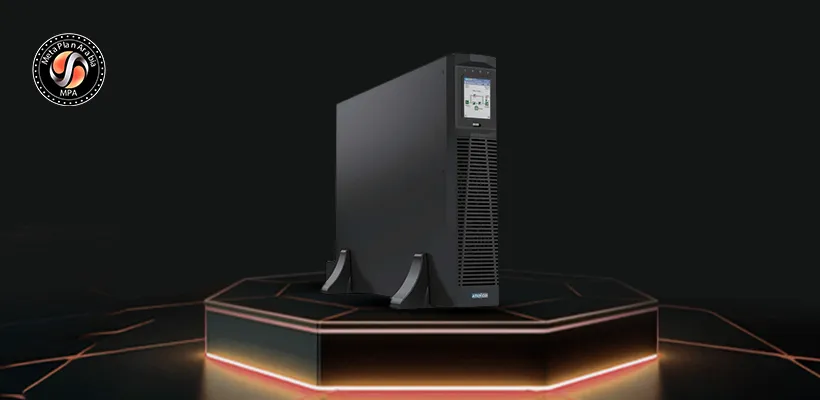
A power failure does more than switch equipment off. It can interrupt transactions, damage data, disconnect security systems, and stop essential operations. Choosing the right 10KVA UPS helps prevent these risks, but capacity alone is not enough. Businesses must also evaluate usable power, battery runtime, installation format, electrical compatibility, and local technical support.
What Could Go Wrong When Choosing a UPS?
A 10KVA UPS can have the correct capacity printed on its label and still be unsuitable for the application. Many purchasing mistakes happen because the decision is based on price or kVA alone.
Common problems include:
- Selecting a system with insufficient usable wattage
- Assuming the advertised capacity equals the actual load capacity
- Ordering the wrong input or output phase configuration
- Expecting more battery runtime than the system can provide
- Choosing a rack unit that does not fit the available cabinet
- Ignoring cooling and ventilation requirements
- Buying a long-runtime model without suitable external batteries
- Receiving a quotation that excludes installation or essential accessories
The right 10KVA UPS should be selected as part of a complete power-protection solution. The connected equipment, electrical supply, operating environment, and required response during an outage must all be reviewed together.
What Does the 10kVA Rating Actually Mean?
A 10kVA rating represents 10,000 volt-amperes of apparent power. It does not automatically mean that the UPS can deliver 10,000 watts.
The usable output depends on the system’s power factor. For example:
- A 10kVA model with a 0.8 power factor may support up to 8kW.
- A 10kVA model with a 0.9 power factor may support up to 9kW.
- A unity-power-factor model may support up to 10kW.
This difference can determine whether the system will safely support the intended equipment. Two products with the same kVA rating may therefore offer different usable capacities.
Before selecting a 10KVA UPS, compare the maximum output in both kVA and kW. The selected 10KVA UPS should support the connected load while maintaining an appropriate margin for temporary peaks and future expansion.
Is a 10kVA System Suitable for Your Equipment?
A 10KVA UPS is commonly used when a business needs centralized protection for several devices or when smaller UPS systems cannot safely carry the combined load.
Typical applications include:
- Server and network rooms
- Telecommunications equipment
- CCTV and access-control systems
- Medical and laboratory equipment
- Industrial control systems
- Retail and point-of-sale infrastructure
- Corporate IT equipment
- Emergency communication systems
- Security and monitoring platforms
Suitability depends on actual electricity consumption, not the number of connected devices. Ten low-consumption devices may require less power than one industrial machine with a high startup current.
A 10KVA UPS is not automatically the correct choice simply because the calculated load is below 10kVA. The assessment must also consider usable wattage, operating margin, load type, startup behaviour, required runtime, and expected growth.
How Should the Protected Load Be Calculated?
Begin by listing every device that will receive power from the UPS. Record the maximum wattage of each device rather than relying only on average consumption.
The assessment should include:
- Normal operating wattage
- Maximum wattage
- Startup or inrush current
- Power supplies and connected accessories
- Network switches and storage equipment
- Cooling or control equipment connected to the protected circuit
- Planned future devices
Add the maximum wattage values to determine the expected total load. The selected 10KVA UPS should not normally operate continuously at its maximum rated output.
An operating margin allows the 10KVA UPS to handle temporary peaks and future additions. The required margin varies according to the equipment and manufacturer recommendations, but running a critical system permanently at its absolute limit leaves little flexibility.
Motor-driven, medical, and industrial loads require additional attention because their startup requirements may be significantly higher than their normal operating consumption.
MetaPlan can assess the connected load and determine whether a 10kVA system provides an appropriate balance between capacity, safety, and future expansion.
How Much Battery Runtime Does the Business Need?
10KVA UPS capacity and battery runtime are separate calculations. A system can support a large electrical load while providing only a short backup duration if the battery capacity is limited.
The required runtime should be based on what must happen after the main supply fails.
A business may need enough time to:
- Bridge a short interruption
- Keep equipment running until a generator starts
- Complete active transactions
- Save data and shut down servers safely
- Maintain communications during an emergency
- Support critical equipment for an extended period
Runtime depends on:
- Actual load in watts
- Battery capacity
- Number of battery modules
- Battery chemistry
- UPS efficiency
- Battery age
- Room temperature
- Frequency and depth of discharge
The same 10KVA UPS may provide a relatively long runtime at a light load and only a few minutes when operating near full capacity.
Ask the supplier for a runtime calculation at the expected load. A runtime value measured at 25% or 50% load should not be presented as the expected runtime when the business intends to operate the system at a much higher load.
When Are External Batteries Required?
Internal batteries in a 10KVA UPS may be sufficient when the UPS only needs to bridge short interruptions or support an orderly shutdown.
External battery modules or cabinets are usually required when the business needs a longer backup period. They provide additional energy storage but also require:
- Suitable installation space
- Compatible battery voltage
- Sufficient charger capacity
- Correct battery protection
- Appropriate cable sizing
- Safe ventilation
- Temperature control
- Maintenance access
A long-runtime 10KVA UPS may be supplied without internal batteries because it is designed to operate with a separately configured battery bank. Buyers should therefore confirm whether batteries are included in the quotation.
The battery configuration must be approved for the selected UPS. An incompatible battery bank can affect charging, runtime, safety, performance, and warranty coverage.
Tower or Rack Mount: Which Format Fits the Site?
Tower and rack-mount 10KVA UPS systems can provide similar electrical protection. The main difference is how and where the equipment is installed.
A tower model stands on the floor and is normally positioned beside server cabinets, electrical panels, production equipment, or technical workstations.
A rack-mount model is installed horizontally inside a compatible server or network rack. Some models are convertible and can be used in either configuration.
Choose a tower system when:
- No suitable server rack is available
- The UPS will be installed in an electrical or technical room
- Floor space is available
- External battery cabinets are required
- Standalone maintenance access is preferred
Choose a rack-mount system when:
- Servers and switches are already installed in racks
- Floor space is limited
- Centralized cable management is required
- The UPS must remain with the protected IT equipment
- An organized server-room layout is important
The right 10KVA UPS format should be determined by available space, equipment weight, ventilation, battery placement, cable routing, and maintenance requirements.
10 KVA Online UPS Tower Distributor Saudi Arabia
A business searching for a 10 KVA online UPS tower distributor Saudi Arabia usually needs more than equipment delivery. It needs confirmation that the proposed system is compatible with the load, site supply, batteries, and operating environment.
Before accepting a tower 10KVA UPS proposal, check:
- Maximum usable output in kW
- Input and output voltage
- Single-phase or three-phase configuration
- Physical dimensions and equipment weight
- Required ventilation clearance
- Internal or external battery arrangement
- Expected runtime at the actual load
- Communication and monitoring options
- Generator compatibility
- Warranty and technical support
The distributor should identify where the system will be installed and whether the room provides sufficient cooling and maintenance access.
A professional distributor should also explain the complete scope of supply. The proposal must state whether batteries, battery cabinets, cables, breakers, bypass equipment, delivery, installation, and commissioning are included.
10 KVA Rack Mount UPS Price KSA
The search for 10 KVA rack mount UPS price KSA does not have one universal answer. Products with the same capacity can differ considerably in usable power, technology, battery configuration, efficiency, warranty, and included services.
Public Saudi listings may show equipment prices within a broad range, but an online price should not be treated as the complete installed project cost.
The final price may be affected by:
- Brand and product series
- Output power factor
- Online double conversion technology
- Rack height and installation depth
- Internal battery capacity
- External battery modules
- Required backup duration
- Network-management cards
- Rack rails
- Maintenance bypass
- Electrical protection
- Installation and commissioning
- Delivery location
- Warranty and maintenance coverage
A low-priced 10KVA UPS may exclude batteries or other components required for operation. Another quotation may initially appear more expensive because it includes batteries, installation, testing, and technical support.
Compare quotations line by line. Confirm that each supplier is offering the same runtime, battery type, electrical configuration, installation scope, and warranty before comparing the final totals.
10 KVA UPS with battery price factors
A 10 KVA UPS with battery price depends on usable output, battery quantity, expected runtime, cabinet requirements, installation format, and included commissioning services.
Comparing a 10kVA UPS with battery price also requires checking battery type, warranty scope, monitoring accessories, and whether installation materials are included in the quotation.
Which Technical Specifications Matter Most?
A useful 10KVA UPS comparison should extend beyond capacity and price. The following specifications directly affect performance and suitability.
Online Double Conversion Technology
An online double conversion system continuously converts incoming AC power to DC and then back to regulated AC power.
Connected equipment is normally supplied through the inverter, allowing the system to maintain continuous output without the conventional switching delay when the main supply fails.
This technology is suitable for sensitive and business-critical equipment that requires stable voltage and frequency.
Output Power Factor
The output power factor determines the usable wattage. Compare the kW rating of each product, not only its kVA capacity.
Efficiency
Higher efficiency reduces electricity consumption and heat generation. Compare efficiency in normal online operating mode, not only in economy mode.
Input and Output Configuration
Available configurations may include:
- Single-phase input and single-phase output
- Three-phase input and single-phase output
- Three-phase input and three-phase output
The correct option depends on the building supply and protected equipment. A qualified technical team should verify voltage, phase arrangement, neutral requirements, upstream protection, and cable sizes.
Maintenance Bypass
A maintenance bypass can provide an alternative power path while the UPS is isolated for inspection or repair. It is particularly important where shutting down the protected load would cause serious disruption.
Monitoring and Communication
Useful monitoring options may include:
- LCD status display
- USB or serial communication
- SNMP network monitoring
- Modbus integration
- Remote alarms
- Automatic shutdown software
- Event and fault records
- Environmental sensors
Remote monitoring is especially valuable for unattended server rooms and businesses operating equipment across multiple locations.
Overload and Expansion Capability
Review the manufacturer’s overload limits and confirm whether the system supports parallel operation or future battery expansion. These features should only be considered valuable when they match an actual operational requirement.
How Do Saudi Operating Conditions Affect the UPS?
Environmental conditions have a direct effect on system reliability and battery life. High temperatures are particularly important because batteries can deteriorate faster when they operate continuously in a hot room.
Install the 10KVA UPS and its batteries in an indoor environment with:
- Controlled temperature
- Effective ventilation
- Sufficient airflow
- Protection from direct sunlight
- Protection from excessive dust
- Protection from moisture
- Clear ventilation openings
- Accessible maintenance space
The UPS may tolerate a wider temperature range than its batteries, but that does not mean the complete system should operate continuously at the highest permitted temperature.
Dust can also restrict airflow and affect cooling. Preventive inspection is therefore important in warehouses, workshops, industrial facilities, and other demanding environments.
Can the UPS Operate with a Generator?
A 10KVA UPS can work with a standby generator, but both systems must be coordinated. The generator must support the protected load, UPS losses, battery charging demand, and any other equipment connected to it.
An undersized or unstable generator may cause the UPS to reject the incoming supply and continue operating from its batteries.
The assessment should consider:
- Generator capacity
- Voltage stability
- Frequency stability
- UPS input tolerance
- Battery charger demand
- Harmonic performance
- Generator response to sudden load changes
The generator and UPS should be evaluated as parts of one backup-power system rather than as independent products.
What Should a Complete Supplier Quotation Include?
A useful quotation should describe the complete working solution. It should not list only a UPS model and a final price.
Ask the supplier to confirm:
- Brand and model
- Maximum capacity in kVA and kW
- Input and output phase configuration
- Battery type and quantity
- Expected runtime at the calculated load
- Battery cabinet or module details
- Rack rails where required
- Monitoring and communication accessories
- Electrical protection
- Bypass arrangement
- Cables and connectors
- Delivery
- Installation
- Commissioning and testing
- Warranty coverage
- Preventive maintenance options
The supplier should also confirm any items excluded from the proposal. This reduces the risk of discovering additional costs after the equipment has been ordered.
When selecting a 10KVA UPS, local technical capability is as important as product availability. A supplier should be able to assist with installation, commissioning, fault diagnosis, battery replacement, and ongoing maintenance.
A Practical Checklist Before Ordering
Before approving a purchase, verify the following:
- Has the actual connected load been calculated in watts?
- Does the UPS provide sufficient usable kW?
- Is an appropriate operating margin available?
- Are startup or peak loads included?
- Is the required runtime clearly defined?
- Is the battery configuration included?
- Does the phase configuration match the site?
- Will the unit physically fit the installation area?
- Can the room provide sufficient cooling and ventilation?
- Is generator compatibility required?
- Are remote monitoring features needed?
- Does the quotation include installation and commissioning?
- Are warranty and maintenance services clearly defined?
- Is future expansion expected?
Answering these questions before ordering is more effective than correcting capacity, battery, or installation problems later.
Choose the Right 10KVA UPS with MetaPlan
Choosing a 10KVA UPS should begin with the operational requirement, not with the catalogue. The correct system must support the real load, provide the required runtime, match the electrical supply, fit the available space, and operate reliably under local conditions.
MetaPlan provides UPS and backup-power solutions for businesses in Riyadh and across Saudi Arabia. Our team can evaluate the connected equipment, calculate the required capacity, plan the battery runtime, and recommend a suitable rack, tower, or convertible configuration.
We can also help businesses review installation requirements, monitoring options, generator compatibility, commissioning, and ongoing maintenance.
Contact MetaPlan to request a technical assessment and receive an itemized solution based on your actual equipment and operating requirements.
Frequently Asked Questions
There is no fixed runtime because it depends on the servers’ actual wattage and the installed battery capacity. A supplier should calculate runtime at the expected load and specify the proposed number and type of batteries.
Neither format is automatically better. Rack-mounted systems are suitable for organized server and network cabinets, while tower systems provide flexible standalone installation. The correct choice depends on space, equipment weight, airflow, battery placement, and maintenance access.
MetaPlan needs the connected equipment list, maximum load in watts, required backup duration, site voltage and phase configuration, installation location, rack or tower preference, generator availability, and monitoring requirements.